Showing posts with label فيزياء الكوانتم. Show all posts

Sunday, October 08, 2006

سر الماء ..


Power of Prayers


Sanskrit Prayer Words


Love for humanity


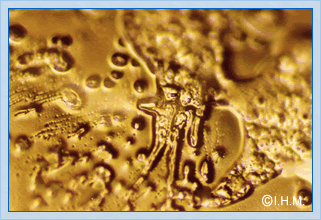
Water with the label "you make me sick"


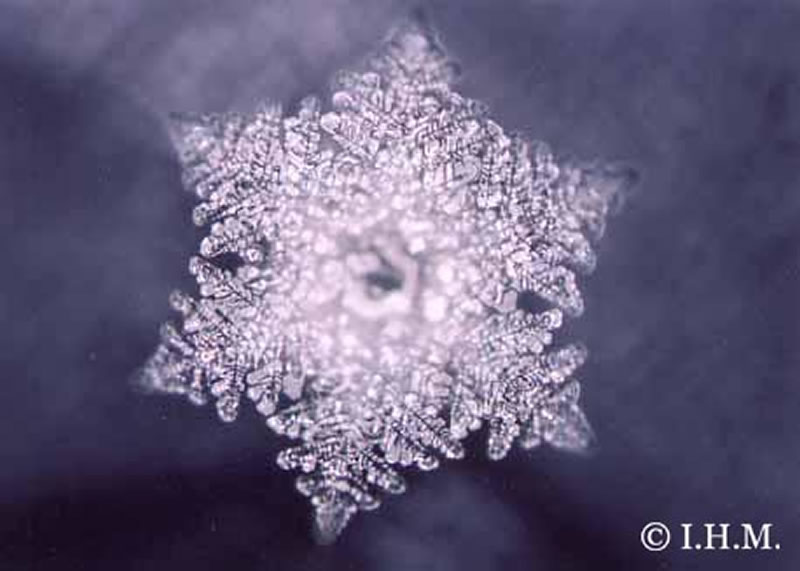
It is a crystal of the water which told
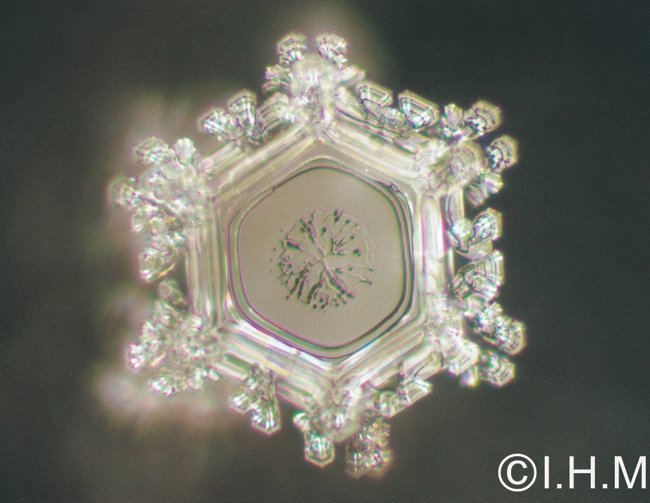
the first movement clarinet quintet A major K581 of Mozart.


DOLPHIN

إهداء إلي الصديق العزيز د/أحمد داوود .. و د/أسامة القفاش


ونكتب شيئا فسيحا عن الماء .. والطين .. والنار .. وعن الصلوات التي لا تري
- طبيب نفسي


لا تقل إن كل هذا خيال وضلال ، فليس في العالم خيال بدون حقيقة .

- جلال الدين الرومي


حدثنا مولانا جلال الدين الرومي عن العين فقال: " العين أهل للوصال ، العين من أصحاب الحال ، أما الأذن فمن أهل المقال .

فلا مجال لإغفال المعني عند رؤية الصورة .. فنحن حين نطرق باب المعني .. يفتح لنا.

إن التواصل البصري هو أحد أجمل أشكال الأتصال بالآخر. حين تكون الصورة هي الأفق الحميم الذي يسمح للإنسان أن يفتح خوابيه الخاصة لمن يحسن ملامسة مفاتيحها وصقل مراياها.

وهكذا قرر
د. إيموتو ـ القادم من ثقافة الضوء والظل اليابانية ـ إنطلاقا من الأنا كمبدأ للإستكشاف، أن يحقق العلاقة بين الصوت والصورة، الكلام والبصر، سردية الخطاب وسردية المشهد .. وجدلية العلاقة بين إهتزاز حبل الصوت وتردد الطاقة الكامنة في إلكترون نقطة الماء في حالة التجمد.

تتلخص نظرية
د.إيموتو في أن نقطة الماء في التجمد يتغير تركيبها الجزيئي والمورفولوجي تبعا للبيئة الصوتية والروحية المحيطة بها في لحظة إلتقاط الصورة.


وهكذا تتشكل النقطة تبعا للطاقة الروحية الكامنة خلف الكلمات.

فتصنع موسيقي موتسارت ..
شكلا ماسيا رائعا،


وتصنع جملة مثل "أنت تصيبني بالغثيان" .. شكلا صحراويا أجدب.

ولا أستطيع إغفال التشابه بين شكل الماء وموتيفات الفن الاسلامي التجريدي أو حليات ايقونات الفن القبطي الجميل.

د.إيموتو نموذج فريد للفعل البناء ، والمشاركة الفعالة لفهم أعمق لهذا الكون الفسيح.


وشتان بين من يجد الجمال في الماء .. وبين من يدمن الصراخ والعنف.

أترككم مع تصاوير
إيموتو ..

Saturday, July 22, 2006

ورحل فلان وحكاياته .. عن الفضاء التخيلي


إهداء

-----

إلي صديقي الجميل فلان ..

من يجمل الهواء للعطاشي، يموت ظامئا.

وها أنت تمضي تاركا فضاءا تخيليا، لترتب طقس الهواء

في حيز الواقع.

الكلمات .. نجمة تتصيدها، لك منها السؤال الخفي

وللفقراء البريق.

--------------------------


إتفقنا أن نقيم العدل في المقهي

وقلنا: نبدأ الآن السماحة في توهجها

ورفعنا راية العصيان ضد الشكل

وشكلنا الحروف كما نريد

وآمنا بضحكة عابرة

وقلنا:لا حدود لنا

جئنا علي نفس القطار

وودعنا الحقول والبحر

ودورنا

لنكون أكثر حدة

ونكون أجمل ما يكون

----------------


محمد ..

سلام عليك يوم ولدت، ويوم حكيت ،

ويوم كتبت عن رحاب والآخرين في زمن ردىء.

دمت لي صديقا.

Friday, June 23, 2006

فيزياء الكم وظواهر ماوراء النفس


إهداء
-----
إلي كل الاصدقاء ... علني أجد معكم مايكفي لإنارة السراج ، والرحلة ..... وإن طالت.


كل العيون تتساوي نواظرها وتتباين مناظرها. فمناظر العموم من نواظرها في إطراقها فعن قصد ما ترجع نظرا، ولو كافحها المنظور بالمنظر تقية وقفها عن الإطراق إلا بها وأرسلها عن النظر إلا به. فحيرت عن الايراء في المرأى، وانفصلت عن الرئي بالموري.

إذا رأيت النار فقع فيها ولا تهرب فإنك إن وقعت فيها انطفت وإن هربت منها طلبتك و أحرقتك .

العلم المستقر هو الجهل المستقر .

أقعد في ثقب الإبرة ولا تبرح وإذا دخل الخيط في الإبرة فلا تمسكه وإذا خرج فلا تمدّه وافرح فإني لا أحب إلا الفرحان .

محمد عبد الجبار النفري


الموجات الكمية الوظيفية والموجات المعرفية
مدخل لدراسة دوران الالكترون الاشعاعي وتشكيل الوعي


تأسيس أول


بعض الأسئلة اثيرت مؤخرا حول الصراع بين نظريات الفيزياء الحديثة وظواهر قبل الادراك. ومن الملاحظ ان هناك الكثير من المقاومه الفكريه لدراسة خوارق اللاشعور ، علي أساس الافتراض المشترك بأن باراسيكولوجيكا الظواهر ـ البحث في ماوراء النفس ـ تتعارض مع المادية المعاصرة نظريا ، وبالتالي فمن المستبعد اثباتها بشكل معملي تجريبي.

وأستطيع القول بأن علوم الفيزياء النظرية المعاصرة لم تكتمل وتتبللور بعد، وقد نري في المستقبل القريب هارمونية العلم الفيزيائي النظري مع البحث في ماوراء النفس .

وقد تسائل حديثا لوتشا عما إذا كانت قوي الطبيعة المجسدة قبل الادراك تنتهك مسلمات النظرية السبية. كذلك لورنتز عندما أشار الي ان التحول الرياضي المتجسد في النظرية النسبية الخاصة غير مهتم او مكترث بإتجاه الزمن.

وبالنظر الي المعادلات الكلاسيكية للميكانيكا النسبية نجد أنها متسقة زمنيا، وكذلك معادلات النسبية الخاصة بديناميكا الكم الكهرومغناطيسي، والتي تتضمن ايضا توازي الزمن ولكن بشكل أكثر تعقيدا، علي أساس عكس الزمن / الوقت
Time Reversal
وبمرجعية القياس لمستوي فيزيقي واحد، نجد ان علوم الفيزياء لاتهتم باتجاه الزمن.

Direction of Time

ومن الناحية العملية، نحن نجرب الزمن في إتجاه واحد. علي سبيل المثال، عند حساب مقدار الاشعاع الصادر من الالكترونات المتسارعة
accelerating electrons

من البديهي إستبعاد أي حلول لمعادلة ماكسويل والتي تتحرك إلي الخلف ـ الماضي ـ وهذه الموجات الماضوية الخلفية ثابتة بالحساب الرياضي، ولكن غالبا مايتم استبعادها لوجود تأثير معين لها يتبع السبب لهذه الموجات.
effect (the backward wave) & cause ( the acceleration of the electron ).

وفي ورقة البحث التي قدمت سنة 1949 فينمان ووييلر ـ طرح فينمان ثابت النظرية الكلاسيكية الكهرومغناطيسية التي تشمل موجات الانتقال الي الوراء في الزمن. وتبين أنه في حالة الامتصاص / الاستيعاب الكامل للكون، حيث لا يتسرب الاشعاع، تأتي الموجات خلفية / ماضوية الزمن لتوفير الطاقة المحافظة علي أثر نقطة في الزمان والمكان ، وبشكل ملائم لإلغاء كل زمكان آخر.

وهو ما أدي الي الاستخدام الفائق لتوازي الزمن في معادلات الفيزياء دون حدوث اي نزاع مع خبرتنا المنطقية والفلسفية والعلمية بأن السبب يؤدي إلي النتيجة

وقد حصل فينمان علي جائزة نوبل بالمشاركة، لتطويره عملية حساب مقدار النظرية الكهرومغناطيسية التي تستخدم الموجات المتحركة للأمام ولكن نجاحه الاعظم كان نتيجة استخدامه التوازي بين الجزيئات ومضادات الجسيمات مثل الالكترون والبوزيترون والتي احتوت علي الزمن العكسي.

ما أريد ان أقوله: أنه حتي في معادلات ماكسويل الكهرومغناطيسية، والتي ترجع الي منتصف القرن الثامن عشر، وجدت بذور وإرهاصات موجات ماقبل الادراك.

ولنا ان نلاحظ التطورات الاخيرة في العلوم الفيزيائية كامتداد اكبر لاطروحة العقل الكمي. انظر كتاب ميشو كاكو ـ مابعد أينيشتين ـ وكتاب
الفضاء المرتفع
Hyperspace
لوصف أعمق لما يسمس بالموجات الكهرومغناطيسية والاهتزاز في البعد الخامس.

هذا وتعد نظرية الوتر وماتلاها ـ نظرة الاوتار الفائقة ـ أحد أهم وأبعد أركان علوم الفيزياء الحديثة. وحتي وقتنا هذا، لم تثبت نظرية الوتر أي شىء وهو ما أدي الي رفضها من قبل بعض المنظرين. ولكن لايمكن انكار الميزة الكبري لنظرية الوتر ،ألا وهي استمرارية الثبوت الرياضي، وهو مايعيب نظرية النسب الكمية للنقطة. ونظرية الوتر تشمل أيضا قوة الجاذبية وهو ماينقص نظرية المجال الفيزيائي الكلاسيكي.

والثمن الباهظ الذي دفعه أصحاب نظرية الوتر للحفاظ علي النسق الرياضي هو إلزامهم للأوتار بالوجود في مساحة لاتقل عن عشرة أبعاد، وهو مادعاهم لتفسير غياب البعد السادس علي أنه ـ إنهيار ـ
Collapse
ناتج عن صغر حجم المجال، حيث ان الابعاد ذات أهمية في إطار العمل الداخلي للجسيمات الاولية.

وهنا يأتي السؤال: ماعلاقة هذا بدراسة خوارق اللاشعور ؟

يجب أن نعلم ان المدخل لدراسة علوم ماوراء النفس هو قدرة هذه الاشارات ـ مثل موجات كهربية ـ علي السفر في الابعاد الاخري. لذلك
ليس من المستغرب العثور علي المعلومات الواردة إلي القفزة العصبية
Neuoral hub
في الابعاد الاربعة للزمان والمكان.
وهذه الابعاد الاربعة العملاقة للكون اللانهائي قد لاتتعدي حجم و أهمية فقاعة صابون في كون ذو عشرة أبعاد أو أكثر ـ 26 ـ .

البحث في ماوراء النفس ، هي منطقة أخري من المناطق التي فتحتها فيزياء الكم كعرضة للتأثيرات الخارجية العشوائية والتي يمكن رصدها ووضعها في إطار تجريبي بإستخدام التفسير اللانهائي لفلسفة الكم. ان الاحتمالات التي تعطيها معادلات الفيزياء هي مقدمة لما يمكن ان يكتشف تحت الميكروسكوب المعملي.

دليل آخر علي إلتقاء فيزياء الكم و البحث في ماوراء النفس ، وهي معارضة نموذج دافيد بوهم لميكانيكا الكم، والتي أقيمت علي فرضية ان الموجة الكمية هي الموجة المعرفية والتي تشع قوة غير عادية للجزىء المتحرك. وهذه القوة تعتبر فائقة وغير عادية لأنها لايصيبها الضعف كنتيجة لضعف الموجة.
وهومايشير الي عدم وجود مسافة في حساب الظاهر الروحية اللاشعورية.وهو مايجعل موجة البون

Psi
في فيزياء الكم تحمل نفس خواص البون في مجمل الظواهر النفسانية كظواهر الإدراك الحسِّي الفائق ، وظواهر التحريك بالقدرة النفسية ،وظواهر ثيتا كالتلبس وحياة مابعد الموت و الزينوجلوسي - التحدث بلغة غريبة عن الفرد تحت تأثير التنويم ـ
Xenoglossy

ومن المفيد للباحثين في هذا المجال وضع الحسابات الكمية علي أساس الترابط الجزيئي. والوصف الرياضي للجزيئات المترابطة يبدو انه يشتمل علي التغييرات اللحظية التي تحدث للمادة، بغض النظر عن المسافة الموجودة بين الجزيئات.
وقد يكون هذا عرض من أعراض الصعوبة الرياضية لتركيب نظرية الكم علي النسبية ، أو مفتاح هام لفهم الفكرة المتأصلة من تشابك المادة كميا ونسبيا. وتفاعل الكمي والنسبي أشبه بالتزامن بين يونج وكوستلر، والذي أفضي الي ان الترابط التقلبدي للمادة يتحدي المنطق الفيزيقي.

معذرة لاستخدام مصطلحات قد تبدو داخل اطار التخصص، ولكن وجب ذكرها للتحفيز علي التفكير في موضوع الترابط بين مكونات الوعي والنظرية الجزيئية وماتلاها من نظريات وصولا للكم والاوتار الفائقة.

والغاية والامل، هو الوصول الي استخدام الوعي الانساني لتنشيط موجات البون ـ مجمل الظواهر النفسانية ـ كأداة لتفسير النشاط الدماغي، والانفتاح علي عوالم إنسانية أرحب، خارج هيمنة الخطاب المادي وأحابيل الحداثة وقيود الرأسمالية
وسيطرة كهنة العلم المؤدلج.

References
----------------
D. J. Bem (1996). Ganzfeld phenomena. in "Encyclopedia of the paranormal", 291-296. Ed. G. Stein. New York : Buffalo, Prometheus Books.
J. Beloff (1990). Dualism.
D. J. Bierman and J. M. Houtkooper (1975). Exploratory PK tests with a programmable high speed random number generator. European Journal of Parapsychology, 1.
D. J. Bierman (1985). Parapsychology and Physics. Journal of Indian Psychology, 7 : 1-17.
(pdf) D. J. Bierman (1988). A world with retroactive causation. Systematica, 7 : 6-12.
D. J. Bierman (1988). Anomalous unconscious emotional responses : evidence for a reversal of the arrow of time. Toward A science of Consciousness, TUCSON III conference.
D. J. Bierman (1997). Anomalous anticipatory response on randomized future conditions. Perceptual & Motor Skills, 84 : 689-690.
D. J. Bierman and D. Radin (1998). Anomalous unconscious emotional responses : evidence for a reversal of the arrow of time. Toward A science of Consciousness, TUCSON III, MIT Press.
M. Bruschi (1989). An experiment on acquisition of information through non conventional channels.
M. Conrad, D. Home and B. Josephson (1998). Beyond quantum theory : a realist psycho-biological interpretation of physical reality. Paper given at the Urbino conference on Microphysical Reality and Quantum Formalism.
D. L. Delanoy (1993). Influencing randomness in physical systems : two meta-analyses.
Y. H. Dobyns and R. D. Nelson (1998). Empirical evidence against decision augmentation theory. The Journal of Scientific Exploration : 12 (in press). Contests E. C. May et al. (1995a).
J. A. Donald Evidence supporting quantum information processing in animals.
B. J. Dunne, R. D. Nelson and R. G. Jahn (1988). Operator-Related anomalies in a random mechanical cascade. The Journal of Scientific Exploration, 2 : 155-...
B. J. Dunne (1993). Gender differences in human/machine anomalies. The Journal of Scientific Exploration.
B. J. Dunne and R. G. Jahn (1995). Consciousness and anomalous physical phenomena. Princeton Engineering Anomalies Research, major experimental and theoretical results over the first sixteen years of activity.
H. L. Edge, R. L. Morris, J. H. Rush and J. Palmer (1986). Foundations of Parapsychology. Routledge & Kegan Paul, London and New York.
M. Germine (1998). Experimental model for collapse of the quantum wavefunction. Dynamical Psychology.
W. Giroldini (1991). Eccles's model of mind-brain interaction and psychokinesis : a preliminary study. The Journal of Scientific Exploration, 5 : 145-...
I. J. Good (1997). Where has the billion trillion gone ? Nature, 389 : 806-807.Cet article est une revue (controversée) du livre de D. Radin (1997) :
The Conscious Universe : The Scientific Truth of Psychic Phenomena. Ed. HarperEdge.

Monday, May 08, 2006

العقل الكمي.. وخرافة الخرافة

إلي الصديق العزيز أسامة القفاش...
عم صباحا يا صديق، وأنعم بالا..
فأنت العارف والعارف لا يكدره شيء ، ويصفو له كل شيء

وأقول قول السهروردي

شربنا على روض الربيع المهفهف
فجاد لنا الساقي بصهباء قرقف
فلما شربناها و دب دبيبها
إلى موضع الأسرار قلت لها قفي
مخافة أن يسطو عليّ شعاعها
فيظهر جلاّسي على سريّ الخفي

رفرفة أجنحة جبريل


Second Review of Possible Roles of Neural Electron Spin Networks in Memory and Consciousness (2004 - 2006)


Hu, Huping, Ph.D, J.D.; and Wu, Maoxin, M.D.; M. Abbott, Ph.D.; F. abdalla, M.D., Ph.D.

Possible Roles of Neural Electron Spin Networks in Memory and Consciousness.

Abstract

Spin is the origin of quantum effects in both Bohm and Hestenes quantum formulism and a fundamental quantum process associated with the structure of space-time. Thus, we have recently theorized that spin is the mind-pixel and developed a qualitative model of consciousness based on nuclear spins inside neural membranes and proteins. In this paper, we explore the possibility of unpaired electron spins being the mind-pixels. Besides free O2 and NO, the main sources of unpaired electron spins in neural membranes and proteins are transition metal ions and O2 and NO bound/absorbed to large molecules, free radicals produced through biochemical reactions and excited molecular triplet states induced by fluctuating internal magnetic fields. We show that unpaired electron spin networks inside neural membranes and proteins are modulated by action potentials through exchange and dipolar coupling tensors and spin-orbital coupling and g-factor tensors and perturbed by microscopically strong and fluctuating internal magnetic fields produced largely by diffusing O2. We argue that these spin networks could be involved in brain functions since said modulation inputs information carried by the neural spike trains into them, said perturbation activates various dynamics within them and the combination of the two likely produce stochastic resonance thus synchronizing said dynamics to the neural firings. Although quantum coherence is desirable, it is not required for these spin networks to serve as the microscopic components for the classical neural networks. On the quantum aspect, we speculate that human brain works as follows with unpaired electron spins being the mind-pixels: Through action potential modulated electron spin interactions and fluctuating internal magnetic field driven activations, the neural electron spin networks inside neural membranes and proteins form various entangled quantum states some of which survive decoherence through quantum Zeno effects or in decoherence-free subspaces and then collapse contextually via irreversible and non-computable means producing consciousness and, in turn, the collective spin dynamics associated with said collapses have effects through spin chemistry on classical neural activities thus influencing the neural networks of the brain. Thus, according to this alternative model, the unpaired electron spin networks are the “mind-screen,” the neural membranes and proteins are the mind-screen and memory matrices, and diffusing O2 and NO are pixel-activating agents. Together, they form the neural substrates of consciousness.


Subjects:
Neuroscience > Biophysics
ID Code:
3544

Deposited On:
06 April 2006


References in Article


1. Marder, E., Abbott, L. F., Turrigiano, G. G., Liu, Z. & Golowasch, J. Memory from the dynamics of intrinsic membrane currents. Proc. Natl. Acad. Sci. USA. 1996; 93, 13481–13486.
2. Hunt, S. P. & Mantyh, P. W. The Molecular dynamics of pain control. Nature Rev. Neurosci. 2001; 2, 83–91.
3. Morais-Cabral, J. H., Zhou, Y. & MacKinnon, R. Energy optimisation of ion conduction rate by the K selectivity filter. Nature 2001; 414, 37–42.
4. Hu, H. P., & Wu, M. X. Spin-Mediated Consciousness Theory: possible roles of oxygen unpaired electronic spins and neural membrane nuclear spin ensemble in memory and consciousness. arXiv e-print 2002; quant-ph/0208068.
5. Hu, H. P., & Wu, M. X. Spin-Mediated Consciousness Theory: an approach based on pan-protopsychism. Cogprints 2003; ID2579.
6. Hu, H. P., Wu, M. X., & F. Abdalla. Spin as primordial self-referential process driving quantum mechanics, spacetime dynamics and consciousness. NeuroQuantology 2004; 1:41-49.
7. Hu, H. P., & Wu, M. X. Action Potential Modulation of Neural Spin Networks Suggests Possible Role of Spin. Cogprints 2004; ID3458.
8. Wertz, J. E., Bolton J. R. Electron Spin Resonance: Elementary theory and practical application (New York: McGraw-Hill Book Company, 1972).
9. Dirac, P. A. M. The quantum theory of the electron. Proc. R. Soc. A , 1928; 117: 610-624.
10. Penrose, R. A spinor approach to general relativity. Ann. Phys., 1960; 10: 171.
11. Penrose, R. Twistor algebra. J. Math. Phys., 1967; 8: 345.
12. Hestenes, D. Quantum mechanics from self-interaction. Found. Physics, 1983; 15: 63-

Sunday, April 09, 2006

نظرية العقل الكمى

Einstein-Podolsky-Rosen Correlations in the Brain-Mind:

In 1935, three physicists, Albert Einstein, Boris Podolsky, and Nathan Rosen criticized quantum mechanics claiming that if it were a complete model of reality, then nonlocal interactions between objects had to exist. Since that was deemed inconsistent with the theory of relativity, quantum mechanics had to be either wrong or at least incomplete. This critique is known as the Einstein-Podolosky-Rosen (EPR) paradox.
Bell prepared the theoretical groundwork for experimental tests of EPR nonlocality and Aspect et al. experimentally verified that a nonlocal correlation between objects indeed occurs once these objects have interacted.
There is now evidence that EPR correlation occurs between human brains. For the rest of this section, we will follow the development given in.
The crucial step was to develop a methodology, a protocol, capable of correlating a pair of human subjects (brains). In their first attempt, Grinberg-Zylberbaum et al (1978) recorded the EEG activity of a senior psychotherapist and his patients during therapeutic sessions. Video and sound recordings were also made. A group of experts analyzed the sound and video recordings and quantified the degree of communication through the sessions using a communications scale from a value of 0 (no communication) to 10 (highest intensity of empathic communication). Another group of technicians, without knowledge of this group, analyzed the EEG recordings and calculated both individual interhemispheric correlation and the degree of intersubject (between therapist and patient) EEG correlations. A direct correlation was found between the degree of communications and the coherence of the EEG of the therapist- patient pairs. Also the changes of interhemispheric correlation in each individual brain were found to correspond to the degree of communication.
However, EEG recordings are difficult to make when subjects communicate verbally because of movement. It is well-known that meditation produces increases in interhemispheric correlations in a subject's EEG recordings (Orme-Johnson et al, 1982; Grinberg-Zylberbaum, 1988). In their subsequent experiment, Grinberg- Zylberbaum and Ramos (1987) tried subjects meditating together and looked for both interhemispheric and intersubject correlations of the EEG recordings. In this experiment subjects also pushed a button signalling the moment at which they felt "direct communication." The researchers found that both the individual patterns of interhemispheric correlations and the overall averages of the interhemispheric correlations of the two brains become very similar during shared meditation with direct communication established. Using control experiments, they checked that the similarity of the EEG patterns is not due to fatigue or habituation but really reflected a specific pattern of correlation for each pair. Subsequent experiments demonstrated that this direct communication could be maintained, as shown by the similarity of their EEG traces, even when the subjects were separated.
The possibility of the existence of a nonlocal transference of specific stimuli, such as those that generate evoked potentials (electrophysiological brain responses produced by a sensory stimulus), was first studied by Grinberg-Zylberbaum et al (1978). They observed that an evoked potential in a stimulated subject is "transferred" to another subject once they have interacted to achieve a level of "direct communication." This study was conducted in two Faraday chambers separated by a distance of approximately three meters. Later the experiment was repeated, replicating the former experiment at a larger distance (14.5 meters). In both experiments, the following protocol, suggested by the earlier experiments cited above, was used:
Two subjects meditated side by side inside one of the Faraday chambers for twenty minutes with the objective of reaching direct communication.
A mild signal was then given to the subjects at which time one of them went to the second Faraday cage and took a reclining position with eyes closed while they both continued to maintain direct communication. The subject that stayed behind was now stimulated (generally by 100 light flashes given at random intervals), but the other subject was not stimulated, nor did he have knowledge that a stimulus was being received by the first subject.
EEG recordings were made from the brains of both subjects synchronized with the stimulus given to one of them. The recordings were averaged over the hundred samples and compared using on-line computers. Low frequency filters were used to eliminate low frequency EEG correspondence such as alpha waves. At both distances, when the stimulated subject showed distinct evoked potentials, the non-stimulated subject showed "transferred potentials" similar to those evoked in the stimulated subject. Control subjects showed no such transferred potentials.
The results indicate that after an interaction between two human beings, in which both feel each other's presence even at a distance, and when one of them is stimulated in such a way that his/her brain responds clearly (with a distinct evoked potential), in roughly 1 in 4 cases the brain of the non-stimulated subject also reacts and shows a transferred potential of a similar shape. Control experiments show that the transferred potentials do not occur when interaction between the subjects does not take place, or when the interaction isn't deemed successful (in establishing direct communication) by the subjects themselves, or when the evoked potential is unclear.
These findings indicate that the human brain is capable of establishing relationships with other brains (when it interacts with them appropriately) and sustaining such correlations even at a distance. The above results cannot be explained as due to sensory communication or electromagnetic signals between subjects (since the subjects were separated during the experiment and located in two semi-silent, electromagnetically isolated chambers distant more than 14 meters from one another in one case) or as due to low frequency EEG correspondence. This point is further borne out by the fact that no distance attenuation of the transference effect was found when the measurements at the two vastly different distances (3 m and 14.5 m) between the subjects are compared. As is well-known, local signals are always attenuated and the absence of attenuation is a sure signature of nonlocality of the observed correlation between brains.
I am convinced that the transferred potential can be interpreted as the effect of quantum nonlocal interaction effect between correlated brains. When one subject is stimulated and observes a light flash, consciousness simultaneously collapses the wave function of the correlated partner in identical states as indicated by the similarity of the distinct evoked potential in the stimulated subject to the transferred potential in his or her non-stimulated partner.
It is also extremely significant that the occurrence of a transferred potential is always associated with the participants' feeling that their interaction has been successfully completed. This indicates that consciousness is involved in the process of correlation. In this respect the transferred potential phenomenon is different from an EPR correlation in which the correlation is established by material local interactions. The EPR correlation is terminated once the wave functions are collapsed. But in the transferred potential experiment the correlation is maintained over many collapses (since the EEG potential readings are averages over many measurements). Thus the idealist interpretation that a nonlocal consciousness collapses the quantum wave function upon measurement also finds validation.
It is interesting also that a transferred potential occurs only in about one in four cases, and usually it is not possible to predict the success of any one particular experiment. This essential acausality, of course, causes controversy adding fuel to the skeptic, but it is in complete accord with the quantum theory where a certain acausality is an essential ingredient of the process.
I would like to discuss the question of message transfer between correlated brains. For correlated objects of conventional quantum mechanics such as photons, a theorem proven by Eberhard effectively rules out any transfer of messages. However, correlated brains, in the present theory, are correlated through consciousness. For such correlation, there is no reason why Eberhard's theorem should apply, and therefore, message transfer may be possible.
Finally, what of all the debunking of the paranormal that realists are so sure they have carried out (an entire journal "The Skeptical Inquirer is devoted to such debunking)? Without question, many of the realist criticisms make valid points; for example, is ESP scientific when it is not strictly reproducible? The point realists miss is that every new science has its own epistemology, and idealist science is no exception. If biologists had to use only the laboratory methodology of pialism is the only reality.
If biologists had to use only the laboratory methodology of physics, there would be no science of biology today. The experimental methodology of idealist science will involve weak objectivity (observer invariance - results should be the same irrespective of who the observer is) rather than strong objectivity (complete independence of results from observers). Furthermore, the mind-set and emotional states of both the observer and the observed would have to be taken into account. And acausality and synchronicity will always be important factors. Also importantly, the experimenters have to be prepared to be transformed as a result of their participation in the experiments.